
{主关键词}
今日头条
China City Talk: How Shanghai is turning public spaces, technology and social care into everyday services_我的网站

A |

An international metropolis on the shores of the East China Sea, a new migrant city rising from the Gobi Desert... China's cities embody a remarkable range of forms and efforts etched across a diverse range of landscapes, all of which is reflected in the everyday lives of ordinary people.
No two cities look alike, yet the standard by which we measure a city's warmth is familiar: Is there a place to rest safely? Is there a hot, decent meal to eat? Is there a corner where even the most vulnerable are treated with care and dignity? These seemingly small details are, in fact, what make a city truly moving.
The Global Times is launching a new series, "China City Talk." In this series, we explore cities across China, focusing on the everyday rhythms of life shaped by the human warmth of public policy and the quiet ways urban governance transforms individual lives. These stories offer one of the clearest windows into contemporary China.
Inside a historic red-brick building that houses a Party-mass service complex, run by a local grass-roots organization of the Communist Party of China (CPC), Kunqu opera enthusiast Li Qin rehearses with her retired friends. Many of the complex's spaces are open to the public, and in its elegantly old-fashioned hall, the arias of the classical opera float gently through the air.
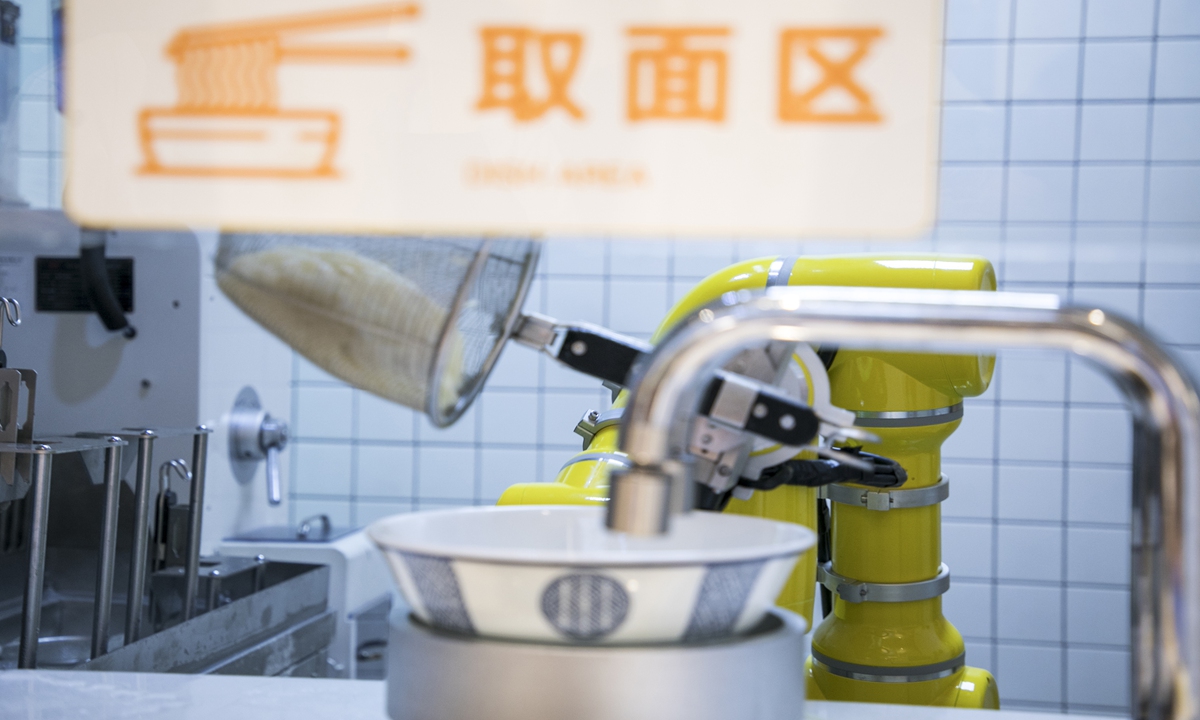
At an AI-equipped community canteen for the elderly, a robotic arm skillfully prepares bowls of noodles. Affordable dishes line the serving windows, and 62-year-old Ao Yongjian, who lives nearby, joins the queue as he always does, choosing the dishes he likes.
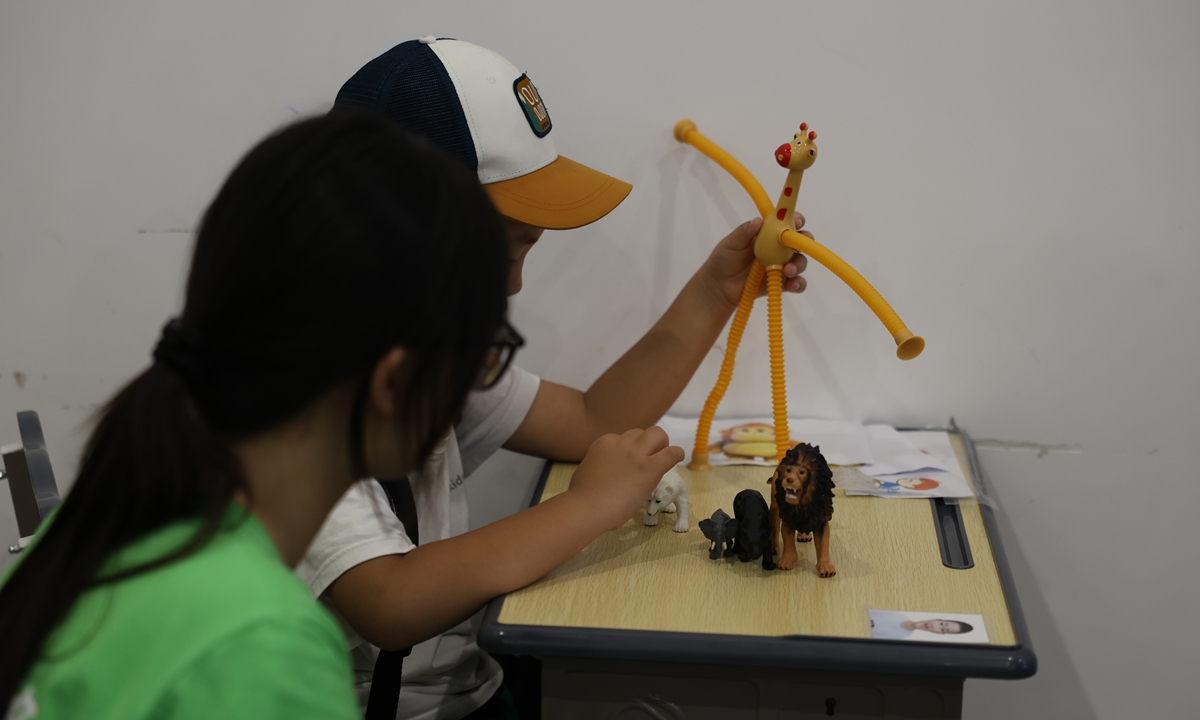
In a mixed-use commercial block, a class at a rehabilitation center for children with autism is suddenly interrupted by a sharp cry from 9-year-old Xiaozheng (pseudonym). A volunteer beside him gently takes his hand and comforts him in a soft voice.
In Shanghai, scenes like these unfold almost every day, in every corner of the city. From some 12,000 Party-masses service complexes to more than 500 community elderly canteens and the city's first summer vacation care program for children with autism, this metropolis is responding to the needs of every single citizen with remarkable care and precision.
A shared home
With its photogenic looks and downtown location, a Party-masses service complex in the Jing'an district's Shimen Road No.2 subdistrict has gone viral on social media, drawing visitors from near and far almost every day.
Set beside Suzhou Creek, the service complex is made up of three century-old, red brick villas. After being restored in September 2025, many areas were reopened to the public free of charge. Residents now come here to read, chat, dance, and even play chess with AI robots.
There is also a "care station," which provides convenient services for couriers, delivery riders and other workers on the go.
At noon, courier Wang Jun stopped by to warm up his lunch and take a short break. He told the Global Times that, because he is always busy, he used to eat lunch squatting by the roadside, or grab a brief rest in the lobbies of some companies. "Now that this place is here, I can eat a hot meal at noon and get out of the rain when it pours," he said with a smile. "It feels like home."
Delivery rider Wang Shuwei first came here on a rainy day while delivering food. On her period at the time, she found the restroom, only to realize she had forgotten to bring a pad. Fortunately, a janitor pointed out that the "care station" offered free pads.
"At that moment, I thought, how can something be this good?" Wang said. She has since become a regular. "The words 'Party-masses service complex' used to sound like something that had nothing to do with me. But after coming here, I realized there are real services here, and the staff are all very kind."
Behind these services lies carefully conducted surveys of nearby residents.
According to He Hanqing, director of the service complex, the renovation began after more than 1,000 feedback forms were collected online and offline. "Many residents wanted the complex to be closer to Suzhou Creek. They wanted a community canteen, while some young people wanted a shared office space, and parents wanted areas to play with their children," she said. They then integrated indoor and outdoor spaces into a single design, extending the renovation to include the surrounding Suzhou Creek promenade and the space beneath nearby bridges.
Today, the service complex receives an average of 4,000 visits a day. More than 30 percent of visitors come from outside the local community, 12 percent are tourists from elsewhere in China, and 7.7 percent are from overseas, according to data provided by the complex staff. In this highly urban complex, where rent for commercial land is extremely expensive, the place has become a shared home for many.
"We are not doing the math in terms of economic returns, but in terms of public sentiment," He Hanqing told the Global Times. "It is worth it to open up precious land to the public for free."
Warming stomachs and hearts
Around 11 am in Shanghai's Hongqiao subdistrict, the aroma of freshly cooked food drifts out of a community canteen. Named a "community canteen for the elderly," it is actually open to everyone, not just seniors.
Through a glass wall, a robotic arm in the back kitchen deftly picks up a tray of washed vegetables and delivers it into an intelligent cooking chamber. Within minutes, stir-fried cabbage is ready to serve. Braised pork, zucchini with scrambled eggs… more than a dozen dishes stand neatly lined up across the counter
Opened in 2021, this is one of Shanghai's earliest AI community canteens. The dishes here are prepared by machines and an AI system. According to the canteen's manager, Dong Yong, the system contains more than 3,000 recipes and can precisely regulate oil and salt use. Beyond its AI features, the canteen also offers full traceability for its ingredients, from procurement to processing.
What really puts diners at ease, however, are the prices. A vegetarian dish costs 4.5 yuan (67 cents), meat dishes range from 6 to 9 yuan, and some specialty items sell for 12 to 18 yuan, according to a price list on the wall.
Seniors aged 60 and above can enjoy discounts and subsidies. "A meal here costs me about 15 yuan on average - it's tasty and a good value," said resident Ao. Since retiring, Ao has come almost every day.
So how can the canteen turn a profit while charging below-market prices? He Junting, an official from the Hongqiao subdistrict, explained that the canteen is part of a government-supported partnership.
The local government provides the venue rent-free, allowing the restaurant to pass on the savings to customers. "That's why the prices are so affordable," she told the Global Times.
After choosing her dishes, a 70-year-old resident surnamed Du sat down at a table and chatted with the Global Times as she ate. Her husband is in the hospital, leaving her little time to cook for herself, so she comes here for lunch four or five days a week.
"The food here is healthy and the prices are friendly. I don't have to bother buying groceries or washing dishes myself," Du said. "The government really has solved an important problem for us older people."
During lunchtime, white-haired seniors, office workers and cleaning staff alike share the same dining space, giving the canteen a lively, down-to-earth atmosphere. Whether powered by AI or run in more traditional ways, these affordable community canteens can be found in nearly every neighborhood across Shanghai - warming both stomachs and hearts.
Much love and care
This summer, Shanghai launched a pilot program for children with autism in three districts, including Changning, marking the city's first attempt at such a summer daycare service.
The Palm Star Children's Rehabilitation Service Center, a professional rehab facility for children with autism, is located in Changning. There, 10 children attend the program, with each child paired with a volunteer.
In the classroom, laughter mixes with sudden cries. When one child has an emotional outburst, a volunteer gently calms him down; when another seems lost in her own world, the volunteer stays by her side, guiding her patiently.
Xiaozheng has been diagnosed with autism spectrum disorder. When his mother fell ill and his father grew busy caring for her, his grandmother was left to look after him alone. In previous summers, Xiaozheng could only stay at home. This year, however, the summer vacation program gave the boy somewhere to go.
Each session of the program lasts three weeks and costs only 600 yuan - less than one-tenth of what a commercial institution might charge. For families like Xiaozheng's, which are struggling financially, this fee is covered by the local government.
In Shanghai, children with physical, intellectual or mental disabilities also receive annual care and living subsidies.
Caring for children with autism is a lifelong process, and summer vacations have long been a gap in that support, said Chu Lin, director of the center. She explained that the program is the result of joint efforts from government subsidies, social organizations and donations from caring enterprises. "Every child has the right to education. By learning here and practicing simple daily living skills and social interaction, we hope their situation can gradually improve."
Among the volunteers is 21-year-old Kalahala Nuerbaishan, a university student majoring in special education. Before taking up her post, she and the other volunteers completed two rounds of professional training.
She shared that at the program, one boy under her care had been silent all day at first, but now he raises his hand to ask for tissues on his own. "Small progress like that gives me a great sense of accomplishment," the volunteer told the Global Times.
Lunchtime arrives. Accompanied by volunteers, the children wash their hands, line up and collect their meals. Some are already seated; others are still restless. Yet the special education teachers and volunteers remain patient, trying again and again to communicate with them.
In Shanghai, the most scenic stretch along the Suzhou Creek waterfront has been left for ordinary residents; the most advanced technology is being used to prepare three meals a day; and the most professional expertise is supporting the most vulnerable children.
This metropolis, as many people living there told the Global Times, is interpreting the meaning of "cities are built by the people, for the people" in the quiet, everyday acts of care that speak the loudest.
。 Wave of listings highlights new growth engines Chinese humanoid robot maker Unitree Robotics opened subscriptions for its initial public offering on the Shanghai Stock Exchange's sci-tech innovation board, or STAR Market, on Monday, as the market witnessed a broader economic shift with future industries expected to power the country's next wave of economic growth. President Xi Jinping, who is also general secretary of the Communist Party of China Central Committee, said in an article published in June in the Qiushi Journal, a flagship magazine of the CPC Central Committee, that cultivating and developing future industries are of great significance for seizing the development initiative, developing new quality productive forces and improving people's quality of life. Efforts should be made to vigorously foster first-class scientific, technological and high-tech enterprises that excel in core technologies and possess strong innovation capacities, Xi said. For decades, China's economic expansion was powered largely by traditional industries, infrastructure investment and manufacturing scale. But the next wave of growth is increasingly expected to come from future industries, including embodied intelligence, future energy, quantum technology, brain-computer interfaces and 6G, which have been highlighted as key areas in China's 15th Five-Year Plan (2026-30). Since leading semiconductor firm ChangXin Memory Technologies debuted on the STAR Market in late July, a number of companies including artificial intelligence chip developer Enflame Technology, semiconductor manufacturer Can-Semi Technology, commercial rocket maker LandSpace and AI chip company Kunlunxin have been moving toward potential listings. Behind the wave of listings is not just a reshuffle of capital market preferences, but a transformation in the sources of future economic growth. Hu Yongjun, secretary-general of future industries and platform economy research center under the State Information Center, said: "Developing future industries is a key move in driving industrial transformation and upgrade. Technologies that appear to be in an exploratory stage today could become engines of economic growth over the next decade or more." He said that future industries will fuel China's economic growth through new trillion-yuan-level industries that will come about as emerging technologies transform into commercial applications, and traditional industries are upgraded by integrating technologies such as AI, digitalization and low-carbon solutions. "More importantly, future industries are not simply about developing several new products. They could accelerate upgrades across an entire industrial chain, from core components to end-user applications," he said. A humanoid robot illustrates this ecosystem effect. Behind a single robot are dozens of interconnected sectors, including AI models, chips, sensors, precision reducers, motors, batteries, new materials, industrial software and intelligent manufacturing equipment. China's electric vehicle industry offers a similar example. Over the past decade, the rise of new energy vehicles has reshaped the global auto industry while driving rapid growth in power batteries, energy storage materials, intelligent driving technologies and automotive chips. In addition, the Unitree IPO and other upcoming listings represent a broader reallocation of capital toward technologies that may require years of investment before generating large-scale commercial returns. Xi also stressed efforts to improve fiscal and taxation policies, vigorously develop technology finance, and optimize government procurement and talent cultivation, introduction and utilization to foster a robust environment that encourages innovation. Tian Xuan, dean of Peking University's Guanghua School of Management, said: "China is transiting from factor-driven growth toward innovation-driven development. Capital is moving beyond its traditional role of financing capacity expansion in mature industries and increasingly taking on the earlier-stage, longer-term uncertainty involved in building future industries." As of June 2026, the STAR Market had attracted 609 hard technology companies, with total funds raised through IPOs and refinancing exceeding 1.37 trillion yuan ($203 billion). More than 40 listed companies on the market have also entered cutting-edge fields such as quantum technology, 6G and biomanufacturing. The China Securities Regulatory Commission has also introduced a regular "green channel" mechanism for IPO financing and mergers and acquisitions involving technology companies in strategically important core technology areas. For instance, Unitree Robotics moved rapidly through the listing process, taking less than four months to go from the application acceptance stage to approval, marking the fastest review under the STAR Market's preliminary review mechanism since its implementation. "Amid the rapid development of AI, rising geopolitical tensions and a growing emphasis on strategic security, China needs to build a financial system better aligned with the development of new quality productive forces," Tian said. "This requires expanding the supply of patient capital, improving market structures, enhancing policy predictability and reducing resource misallocation, thereby providing sustained and solid financial support for innovation," he added.

 。
。Current article:http://207yxy4.chaochangkuanbandangyogeseng.sbs/zmfv/20260826/4093.html
Published on:13:23:03
- 8472728用石头袋子等物占位领免费食物 居委会:只接受真人排队
- 8011永安龙岭社区:银发护银发 余热暖晚晴
- 5006市场监管总局发布酱香型白酒掺杂食用酒精筛查检验方法,市场监管总局发布酱香型白酒掺杂食用酒精筛查检验方法
- 91669全球俱乐部品牌价值排行榜出炉:皇马连续第3年排行第一;中国足球俱乐部方面,北京国安排名第一
- 8892578原创 世界上最危险的5个国家:全民吸毒、黑帮比警察多,出国最好避开
- 557369想在长岛吃当日现捕海产 长岛民宿怎么选
- 69106美国友人“赛考斯”时隔20余年重返中国:我回到了我的第二个家
- 7055325纵览文娱|第33届中国电视金鹰奖提名揭晓:河北参与创拍《浴血荣光》获三项提名,现实题材角逐激烈
- 70519美国发布“罪己诏”:我们的武器,被以色列政府错误地使用了
- 7713706平台设置虚假归还点位,反馈问题不处理
- 297435Mobile Game की लत में फंस नाबालिग ने पिता के खाते से उड़ाए 70 हजार, फटकारने पर हो गया फरार म की लत में फंस नाबालिग ने पिता के खाते से उड़ाए 70 हजार, फटकारने पर हो गया फरार
- 1744029大鹏探探探 | 河北首家山姆会员店,记者带你抢“鲜”看
- 23737Activist runs 9,000 miles across Australia to raise support for Indigenous Voice
- 3451848一个以上的新年开幕:一个以上的手机6(8GB 128GB)版本2668元6期免息
- 4356806Chinese naval fleet embarks on latest escort mission in Gulf of Aden, Somali waters
- 52698538个月身体年轻近15岁,多项指标变好!45岁教授拿自己做实验,这4点可以直接“抄作业”
- 40898.86秒!人形机器人百米竞速再次刷新纪录
- 7251上海女足主帅:无冠名赞助商时,我们的年轻队员就拿5000块钱月薪
- 1654江西省第六届“双品网购节”在昌启动
- 8685掌握这6项隐藏功能,使您的支付宝账户更加安全。
- 16339“沙德尔”凌晨进入警戒线!中心风力15级!正向浙闽一带沿海靠近!福建发布暴雨警报,局部有特大暴雨
- 980682025淘宝京东618红包最后一波:京东618最新红包口令是:红包588,淘宝是:好运红包8811
我的网站热门国内
- Copyright @ 2016-2017 我的网站 版权所有